What is MRgFUS?
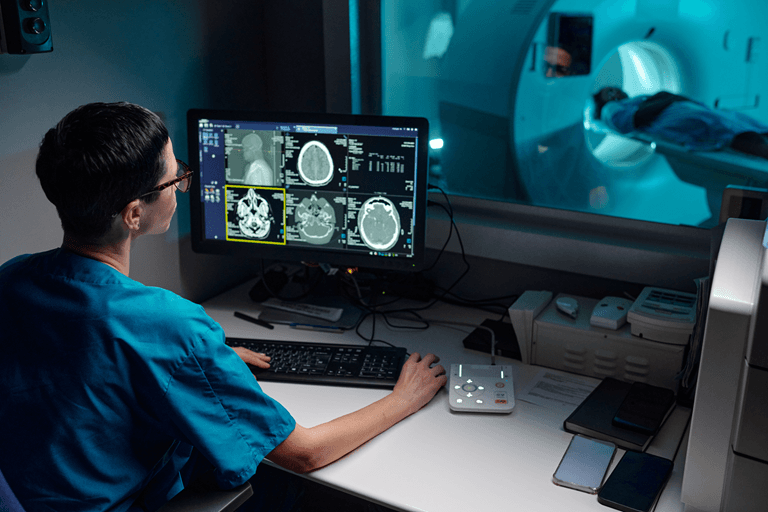
MRgFUS stands for Magnetic Resonance Imaging (MRI) Guided Focused Ultrasound. This treatment option combines the imaging capabilities of MRI with focused ultrasound technology. Because the ultrasound energy is directed with such precision that healthy surrounding tissues are left unharmed, the treatment area is determined completely by the practitioners and the brain remains intact. This is in stark contrast with traditional surgical techniques, which rely on interventions that are invasive and require the brain to be opened.
The treatment is completely non-invasive. Therefore, the recovery period after the procedure is generally much shorter.
Who is MRgFUS Treatment For?
Severe and uncontrolled tremors that are not sufficiently improved with other treatment options may indicate that MRgFUS is appropriate. Other treatment options may include oral medications, traditional surgical techniques, or deep brain stimulation. For individuals who have exhausted the other treatment options and whose tremors are significantly impeding their ability to perform their activities of daily living, MRgFUS may be more appropriate.
Tremors that may be treated with MRgFUS may include:
-
Tremors that affect the ability to hold and manipulate objects -
Tremors that impede the ability to dress oneself -
Tremors that affect the ability to eat and drink -
Tremors that may affect the ability to write -
Tremors that may affect other activities of daily living and cause a loss of independence
How Is the Condition Diagnosed?
An assessment by a neurologist is needed to confirm the diagnosis and to determine whether the patient is a candidate for MRgFUS.
An assessment generally includes the following:
-
Medical History -
Neurological Exam -
Tremor Severity Assessment -
Brain MRI -
Medication Review -
Evaluation of Overall Health
These tests will assess the cause of the tremor and will determine if MRgFUS is the right treatment.
MRgFUS Treatment Frequently Asked Questions
Is MRgFUS considered a surgery?
MRgFUS is a non-invasive treatment. No incisions, sutures, or materials are placed in the body. The procedure is accomplished via MRI and focused ultrasound.
Who is a candidate for MRgFUS?
MRgFUS is primarily indicated for a select group of patients with medication-refractory Essential Tremor or Parkinson’s Disease with a dominant tremor. Further evaluation of the patient is completed via a detailed neurological exam.
Will I be sedated for the procedure?
No. Most patients are asked to remain fully alert and conscious. The medical team uses this opportunity to monitor the patient’s symptoms and the results of the treatment in real time.
How long will the procedure last?
Allow several hours for treatment and for the medical team to complete their post-procedure assessments. Your medical team will provide an estimated time for the procedure as part of your appointment.
Is MRgFUS painful?
There may be some temporary discomfort due to the treatment frame or some brief sensations that occur during the procedure. These are mild, and MRgFUS is generally well tolerated by patients.
Are There Any Side Effects?
Like any other treatment, MRgFUS has side effects. Temporary dizziness and headaches, mild imbalance, and mild numbness have all been reported. These symptoms are short-lived and improve during recovery.
How Soon Can I Return to My Normal Activities?
Most patients can return to their daily activities within a few days, but this depends on recovery and your physician’s recommendations. Follow-up appointments are also a key aspect of your recovery.
What Are the Benefits of MRgFUS?
For patients who qualify, MRgFUS has several benefits, such as:
-
No surgical incisions -
No stitches or devices are left behind -
MRI-guided precision -
Shorter recovery time -
Shorter hospital stays -
Improvement of tremor control (experienced by many patients)
Results vary per patient. Your neurologist will help you understand what benefits you can expect based on your specific case.
When Should You See a Neurologist?
If your tremors are worsening and impacting your daily activities even if you are taking medication, then you should see a specialist. The earlier you are evaluated, the earlier we can understand the symptoms and decide if MRgFUS or another advanced treatment is warranted.
Conclusion
MRI-Guided Focused Ultrasound is a ground breaking treatment option for a select few movement disorders. The non-invasive approach means this treatment option can help many patients gain improved control of their tremors and thus, improve their quality of life. The more a patient understands the treatment, who is eligible, and what they can expect, the more confident they will be able to make their decision.
Royal Care Neurosciences has experienced neurologists and neurosurgeons who offer thorough evaluation and treatment using MRI-Guided Focused Ultrasound (MRgFUS). We take care of the full treatment cycle – from diagnosis to treatment and beyond. Our aim is to provide customized care that leads to better movement and independence along with enhanced quality of life.
FAQs
1. Is Essential Tremor and/or Parkinson’s disease cured by MRgFUS?
Neither case is cured by MRgFUS. We have found that MRgFUS has the potential to decrease tremors and assist patients with MRgFUS to function better in day-to-day life.
2. Can anyone with tremors receive MRgFUS?
The answer is no. This is dependent upon the diagnosis of the patient, the health of the patient, and the MRgFUS evaluation. Your neurologist will decide if this is an option for you.
3. Why do we need to do an MRI prior to MRgFUS?
MRIs allow us to ensure that we have the correct diagnosis and that the anatomy of the brain is in the shape and setup that we expect in order to facilitate the focused ultrasound.