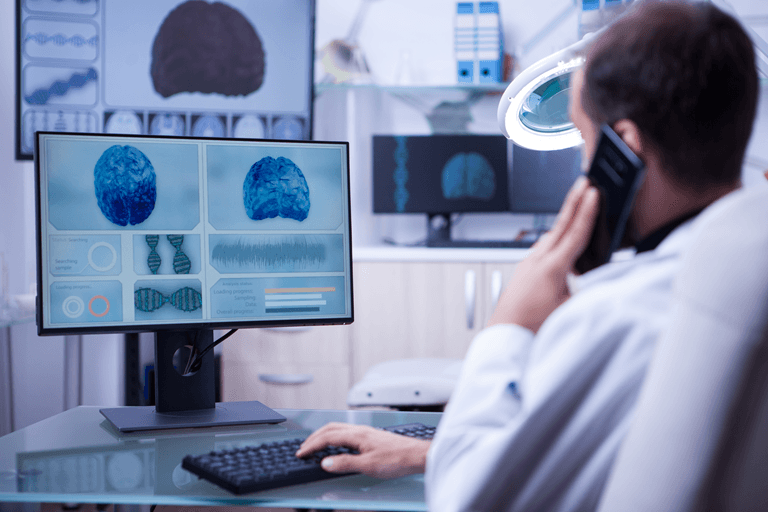
When a brain tumour is suspected, the first step is usually determining the exact location. This is important as different regions of the brain are responsible for different functions: movement, speech, vision, memory, and even controlling balance. Determining the location of the tumour may suggest certain symptoms and inform what treatment may become necessary.
Brain scans, neurological exams, and even a biopsy in some cases help give a clearer picture of what is going on with the tumour.
What are the Symptoms of a Brain Tumour?
The symptoms are caused by the location of the tumour and its size, and also how fast the tumour grows. The symptoms may include:
- Persistent, severe headaches
- Seizures
- Nausea or vomiting
- Changes in vision or vision problems
- Problems speaking
- Weakness or numbness anywhere
- Balance and coordination problems
- Problems focusing or memorizing
- Changes in behavior
These symptoms may be caused by many different conditions, so they do not necessarily mean you have a brain tumour.
How do Doctors determine its Location?
MRI Scan
One of the most effective methods for finding the location of a brain tumour is an MRI scan. Detailed images of the brain are produced. The size and shape of the tumour and its location are shown. An MRI scan may be useful for determining how close the tumour is to healthy brain tissue.
CT Scan
For finding swelling or tumours in the brain or to determine bleeding, a CT scan is a very effective method, which relies on X-Rays. If an urgent evaluation is needed, a CT scan may be very useful.
Functional MRI
fMRI (functional magnetic resonance imaging) may be used by doctors when a tumour is located near a region controlling speech or movement. fMRI may be used to identify brain areas that control functions and assist in the development of a more individualized and less invasive treatment.
How Does a Neurological Examination Help?
Scans contain information on the physical location of the tumour, but a neurological examination helps the doctor understand the impact the tumour has on the patient.
In this examination of the patient, doctors check:
- muscle strength
- reflexes
- sensation
- vision
- speech
- balance
- coordination
- memory
These all help determine the general location of the affected area of the brain.
Is a Biopsy Needed?
Though not all brain tumours require biopsy, some tumours can be diagnosed and treated based on the scans. When it is necessary to confirm the exact nature of the tumour, a biopsy may be warranted.
A biopsy removes a small portion of the tumour to a lab for further analysis. This can determine the type and grade of the tumour, which can help with forming a treatment plan.
Why Does Tumour Location Affect Treatment?
The size, type and location of the tumour dictate the treatment. This can include surgery, radiation, and/or chemotherapy, but may include combinations of treatments.
When surgery is warranted, imaging can help the neurosurgical team create a safe path to the tumour. Brain mapping can be done when the tumour is located in areas of critical functions.
When Should You See a Specialist?
If you experience confusion, headaches, seizures, changes in your vision, weakness, trouble speaking, or an imbalance, you should seek medical treatment. A neurologist or neurosurgeon will decide if you need an MRI or other exams.
Sudden loss of weakness to one side of your body, loss of the ability to speak, or a blackout are some of the reasons you should seek immediate care.
Conclusion
Doctors figure out the location of the brain tumour with MRI and CT scans, and the neuro exam and sometimes functional imaging or biopsy. When brain tumours are in particular spots, they help figure out the symptoms and the best way to take care of the patient.
At Royal Care Neurosciences, our specialized neurology and neurosurgery teams perform a comprehensive evaluation and provide highly customized care for patients with brain tumours. Through advanced imaging and assessment, we aim to provide the correct diagnosis and the right care.
FAQs
1. What is the best scan to find a brain tumour?
Though it is thought that MRI is the best scan to find brain tumours, CT scans are sometimes used to get fast images.
2. Can an MRI show exactly where a brain tumour is?
Definitely, an MRI can show the location of the tumour as compared to some brain structures. Functional MRI can also give us information, especially when important brain areas are involved.
3. Do all brain tumours have to have a biopsy?
Not at all. Tissue to confirm the tumour and help with treatment is the only reason a biopsy is done.