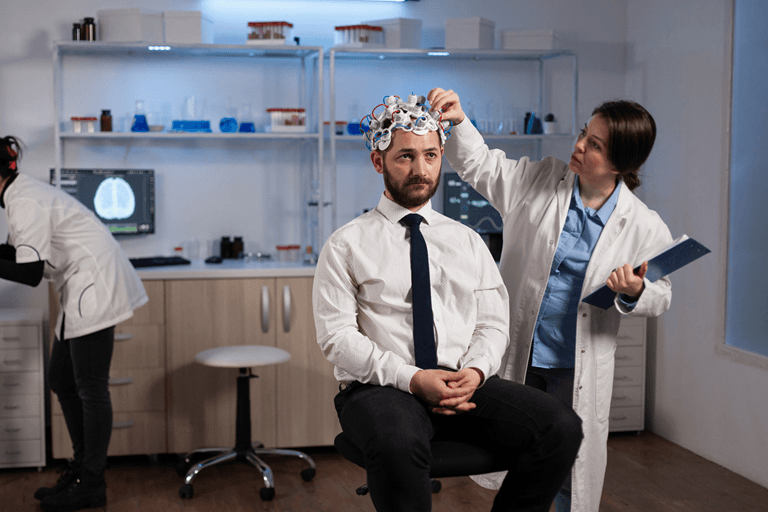
Have you ever seen someone whose hands are shaking or whose muscles are unusually stiff and slow? These symptoms may suggest a movement disorder, a collection of illnesses and disorders that cause difficulties with movements. Maybe you know of Parkinson’s disease, essential tremor, or dystonia, but these are just a small fraction of the entire spectrum.
Neurologists are the detectives of the brain and nervous system. These specialists conduct thorough investigations to understand the cause of these symptoms and the most effective treatment methods. The good thing is that the patient care and treatment methods today are far more sophisticated and guided by patient wellness technology than ever before.
Let’s take a closer look and understand it together, just like talking to a friend over coffee.
What Are Movement Disorders, Exactly?
Movement disorders are illnesses caused by the malfunction of the brain communicating properly with the muscles. This can result from excessive movement (tremors and jerking) or idleness of muscles (slowed) and rigidity.
Some of them are:
-
Parkinson’s disease causes tremors, stiffness, and slow movements. -
Essential tremor – Mostly shaking of the hands and arms. -
Dystonia – This results in involuntary muscle contractions. -
Huntington’s disease – A biological illness that leads to spontaneous, jarring movements.
Each of these has its own set of traits and difficulties, so diagnosis and treatment are not a cookie-cutter method.
How Do Neurologists Diagnose Movement Disorders?
Imagine diagnosis is like solving a crime. A mix of inquiries, instruments, and examinations is what neurologists need.
1. Detailed Patient History
To start, the neurologist will ask:
-
What is the start date of the symptoms? -
Are the symptoms intensified in the morning or evening? -
Do relatives have similar symptoms?
Despite how easy these questions appear, many patients have important diagnosis-related conversations during that phase.
2. Physical and Neurological Exam
The physical and neurological examination will have the assessment of muscle power, gait, coordination, reflexes and equilibrium. As part of the evaluation, you will be asked to perform simple movements like finger tapping and walking straight, aiding the identification of abnormalities.
3. Imaging And Other Complex Tests
To support or refute a proposed diagnosis, the following procedures may be performed:
-
MRI scans – for abnormal brain structures. -
DaTscan specialized scans for Parkinson’s Disease and other bradykinetic syndromes to assess dopamine levels. -
Genetic testing for some hereditary illnesses, like Huntington’s disease. -
Electromyography (EMG) – evaluates the functions of the nerves and muscles.
How Are Movement Disorders Treated Today?
As there is no single treatment that fully treats the movement disorder, efforts are being made to improve the management of symptoms, slow the progression of the disease, and improve the quality of
life. The options available now are far better than before.
1. Physical and Occupational Therapy
They help maintain the body’s strength and flexibility. They instruct patients on how to perform basic movements and complex tasks step by step when they are easy to do or a challenge to perform.
Did you know? Tango and other dances have been found to be very useful for Parkinson’s patients for balance and overall movement.
2. Lifestyle Changes
Participants will notice an increase in balance and coordination with a well-planned routine such as walks and yoga.
A healthy diet that is particularly rich in fiber and fluids improves the digestion and the absorption rate of medicines.
Mental health assistance is a necessity – managing a long-term condition can be emotionally difficult.
3. Surgical Treatments
-
In some situations, especially when treatment does not help anymore: -
MRgFUS – a form of surgery that is focused on the brain’s area that controls tremors. -
Deep Brain Stimulation – a small device is implanted in the brain that gives it electric pulses. It’s like a pacemaker for the brain.
The Human Touch: Compassion in Care
Experts in brain disorders have expanded their roles and can help their patients in different ways. With the rise of multi-disciplinary teams, which include physiotherapists, psychologists, and speech therapists, care is becoming more holistic and patient-centered.
Patients appreciate the care provided. One of the patients thanked the doctor by saying, “Thank you for helping me feel like myself again.” That’s the intention – not only alleviating symptoms but enhancing self-esteem, dignity, and autonomy.
Despite feeling intimidating at the onset, movement disorders are well catered for in modern neurology with a diverse range of diagnostic and management options. Advanced brain imaging, innovative surgical techniques, and personalized treatment strategies will help in improvement.
For you or someone you know, if these unusual movement patterns are prevalent, there is no time to waste. Diagnosis of these diseases with movement disorders is performed by a neurologist. There are
measurable indicators for such disorders; with an early diagnosis, there are definite interventions that are available, and a lot can be done.
Frequently Asked Questions
1. Essential tremor and Parkinson’s disease is there any difference?
Both conditions are shaking disorders, but the essential tremor is performed by the hands to the arms with movement, while the rest and motion involved tremor of the arms in parkinson’s disease.
Parkinson’s also includes a lot of other symptoms, such as stiffness in arms and limbs, along with slow movements, which are not present in essential tremor.
2. Is there any chance of a movement disorder and is there no therapy?
Treatment is the approach to which most movement disorders are chronic in nature, and with no way of permanently fixing the disorder, there are remedies such as drugs that have been developed, therapies and in extreme cases, there is available surgery that can alleviate symptoms as well as augment and enhance the way a person feels in life.
3. For movement issues when is it that a neurologist has to be visited or consulted?
Not checking trembling, stiffness, slouching, walking, activities and motions that are out of the ordinary come in the bracket of neurologists as these indeed have no explanation and can be a good decision. It is always best to get early checkups, as one is guaranteed the best outcomes.